
SCA is launching SCA Curtain Wall – a prefabricated wood-based façade system that can reduce climate impact by up to 60 percent while streamlining the construction process. With verified performance and high flexibility, the system provides commercial buildings with a faster, greener, and more precise path from design to completed façade.
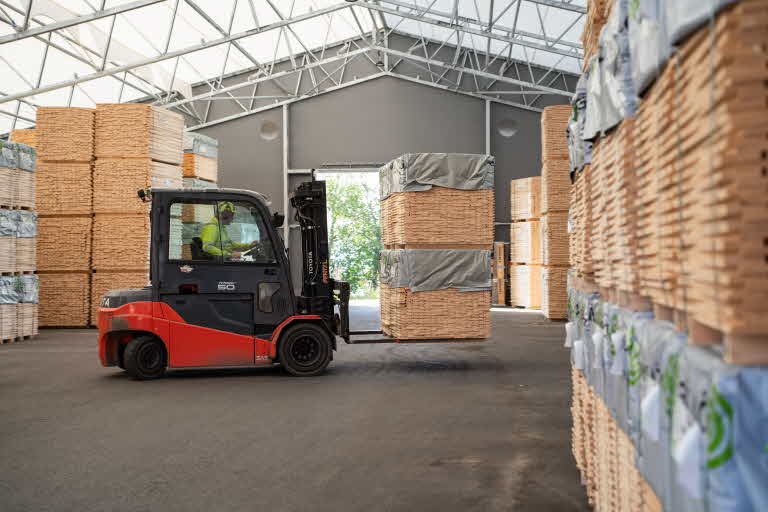
When every piece counts
- News
- Wood products
At Gelfa in Gällö, wood in grades that are not suitable for products such as flooring and cladding is instead used to make components for pallets. A scanning system identifies defects in the boards so that the usable parts can be put to good use. Offcuts are used in wood pellets production
Gelfa is located a stone’s throw from the Gällö Sawmill, which delivers raw materials for the production line. The wood that arrives here is called side boards; this is wood that does not meet the requirements for products such as flooring and panels, and is sorted out by the sawmill. These parts can however be utilised at Gelfa.
Precision cutting involves scanning and analysing the timber based on the requirements placed on the finished product. The system identifies defects and then determines where the board should be cut. This results in boards of specific lengths and grades, while defective parts are discarded.

“The scanner scans the boards and optimises cutting based on the product and the customer’s quality requirements. Among other things, we can sort out knots, bark, waney edges and mould,” explains Niclas Svensson, Site Manager at Gelfa.
The boards are cut to lengths of between 400 and 3,000 millimetres, meaning that part of a board can be used even if another part does not meet quality requirements.
“If there’s a defect in the middle of the board, we can cut that part away and use the rest. This means that more of the raw material can be used,” says Svensson.
The offcuts are sorted and shipped some 50 kilometres from Gällö to the SCA planing mill in Stugun, where the material is used in wood pellet production. So, even the parts that are not suitable for further processing create value, as more of the log is utilised.
Ready for production
For Gelfa’s customers, this process means that timber is delivered as components in the lengths and grades they require. The material can therefore go straight on to the next production stage without the need for cutting and sorting.
“Our customers receive the components they use in production, in the right length and grade. This reduces the need for cutting and waste management,” says Svensson.
Meanwhile, the location adjacent to the Gällö Sawmill means that the raw material is close to the production line. This allows for flexible planning as requirements for different dimensions or grades change.
“One major strength is that we can quickly adapt our planning to our customers wishes. As we are close to the raw material, we can obtain it to meet day-to-day demand,” says Svensson.

Multiple areas of use
At present, production is primarily geared to components for the pallet industry, with Scandinavia the main market. However, the ability to control both length and grade opens the door to other areas of use. Bed bases and packaging are two areas highlighted by Svensson.
Going forward, the aim is to reach more customers in both Scandinavia and the rest of Europe. Svensson also sees opportunities in segments of the pallet industry that place other requirements on raw materials.
“We see potential growth within segments that place higher demands on the quality and appearance of pallets. For example, this might be pallets that accompany the product further along the distribution chain, perhaps all the way to the retail outlet. The visual impression may then be more important, and different demands will be placed on the raw material,” says Svensson.
Latest news on this topic
Norsk Limtre
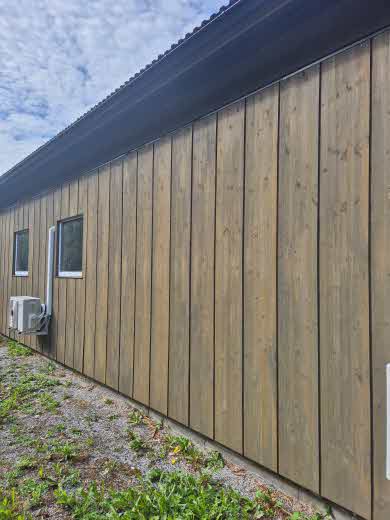
Norsk Limtre is a company with a long tradition in glulam production, offering a wide range of products from interior paneling to decking. Since the early 1990s they have been a customer of SCA, and today they are looking at new ways of using Lodgepole Pine. This partnership combines experience with innovation to develop the wood products of tomorrow.

Jonna Sundling
When cross-country skiing sprint champion Jonna Sundling was growing up in the small village of Tvärålund outside Umeå, the forest was her own domain. Skiing was something she did for fun with her friends and gold medals were beyond her dreams back then.