
When Nils and Lena built their house in Härnösand nearly 15 years ago, they wanted an environmentally friendly, energy-efficient home. A pellet stove became the heart of the house. Combined with solar collectors, rooftop solar panels, and a heat pump, they’ve created a sustainable, warm, and cozy home.

9,000 tonnes of jam are cooked using wood pellets
Danica Foods in Lycksele has been producing jam since 1994. What began as a berry cleaning facility in Rusksele has developed into one of Sweden’s largest jam factories. In recent years, the company has implemented several measures in its production, including switching from oil to pellets, which has reduced its use of fossil fuels.
Traditional product
Jam is a classic staple product that is not significantly affected by economic fluctuations. However, production has changed over time. The sugar content has gradually been reduced, and packaging sizes have become smaller as single-person households have become more common. In addition to traditional jam, Danica Foods' product range includes a series sweetened with stevia, as well as organic products.
Switching from oil to pellets
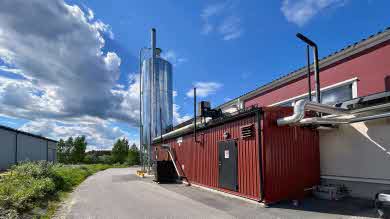
A few years ago, the company replaced its former oil-fired boiler with an 850 kW pellet boiler, reducing the use of fossil energy in production, says Factory Manager Peter Andersson.
“We have varying energy demands in production and were unsure whether a pellet boiler could handle them. But it has worked well,” he says.
The pellet boiler produces steam that is used to heat the jam to 80-90°C in steam-jacketed kettles. The steam is also used during the sealing of glass jars, where it displaces air and creates a vacuum that helps extend shelf life.
Several measures in production
The switch to pellets was followed by additional initiatives to reduce resource consumption. In collaboration with students from Umeå University, the company carried out a project that cut water consumption in the cooling process for finished jam by half.
Energy and security of supply in focus
When the decision was made to switch to pellets, both economic considerations and renewable energy were important factors. Since then, security of supply has also become a key consideration.
For example, the war in Ukraine affected the availability of glass jars, as the country is a major producer.
“We use around 40,000 glass jars per week, so it became a challenge when deliveries from Ukraine stopped. At times like that, it feels reassuring not to be dependent on imported fuel for our production anymore,” Peter concludes.

It feels reassuring not to be dependent on imported fuel for production.
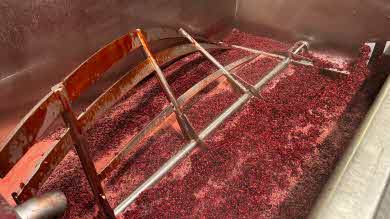
Each kettle has a capacity of 1,000 to 2,000 kg of berries.Fotograf: Erika Edmark
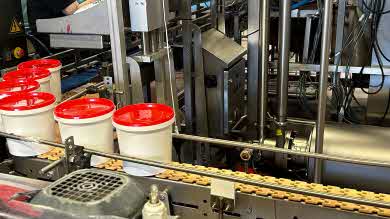
The jam is filled into plastic buckets, glass jars, or sausage-shaped casings.Fotograf: Erika Edmark
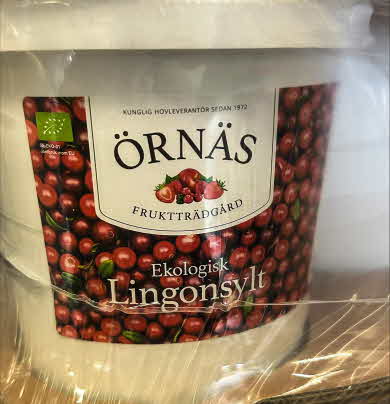
Royal Warrant Holder through its own brand, Örnäs Fruktträdgård.Fotograf: Erika Edmark
850 kW pellet boiler with pellet siloFotograf: Erika Edmark
Each kettle has a capacity of 1,000 to 2,000 kg of berries.Fotograf: Erika Edmark
About Danica Foods, Lycksele
- 19 employees work in three shifts and produce 8,500 to 9,000 tonnes of jam per year.
- Part of Good Food Group, which has approximately 500 employees across the Nordic region and Poland.
- Around 90 percent of the berries are frozen to enable year-round production.
- Each jar is labelled to ensure traceability to both the production batch and the raw materials.
- The jam factory holds a Royal Warrant through its Örnäs brand. A company can become a Royal Warrant Holder by supplying goods or services to a member of the Swedish Royal Family. This requires at least five years of operation, sound financial management, and a structured environmental management programme.
Did you know this about jam?
- As early as ancient times, people preserved fruit. The Romans used honey and made something similar to jam long before sugar became common in Europe.
- In the past, jam was a luxury product because sugar was expensive. It was not until the 19th century, when sugar became more affordable, that jam became an everyday food in Europe.
- Jam and other preserves were a way to store summer berries and fruit, making them available during the winter when fresh fruit and berries were not.
- Today, jam is not only about preservation. It is just as much about flavour and enjoyment.
Related content

From by-product to efficient biofuel
Pellet production involves much more than simply compressing sawdust. Through drying, refining, and pelletising, raw sawdust is transformed from a moist and bulky by-product into a dry, energy-dense biofuel that is easy to store, transport, and use.

Bioenergy for businesses
SCA’s extensive forest holdings and sawmill operations provide a stable, long-term supply of renewable by-products that can be used for energy generation. We offer both forest-based biofuels, such as logging residues and stemwood chips, and sawmill-based biofuels, including bark, sawdust, and pellets.